
The Hidden Costs of Hand Washing vs. Commercial Dishwashing in F&B
- Jess Chan
- Apr 14
- 7 min read
If you have ever run a small F&B outlet, you have probably done the math at some point. A commercial dishwasher costs thousands of dollars upfront, while a sink, some soap, and a hardworking staff member seem to do the same job for a fraction of the price. On paper, hand washing looks like the smarter, more economical choice. Many F&B operators assume this is true because it avoids the upfront cost of a commercial dishwasher. The honest truth? Manual dishwashing often creates a long trail of hidden expenses that quietly drain your bottom line without ever showing up on a single invoice.
This article walks you through the real cost of hand washing vs commercial dishwasher use in F&B operations. You will learn the five hidden costs most owners never calculate, from labour hours and water waste to breakage, chemical overuse, and sanitation risk. We will break down real world numbers using a 60 seat bistro example, walk you through a quick diagnostic checklist for your own kitchen, and explain why the cheaper looking setup may actually be reducing your profit margins. By the end, you will have a clear, numbers based picture of whether your current setup is truly saving money, or quietly costing you far more than you realise.
Why F&B Owners Underestimate the True Cost of Hand Washing
Before we look at the numbers, it helps to understand why hand washing seems cheap in the first place.
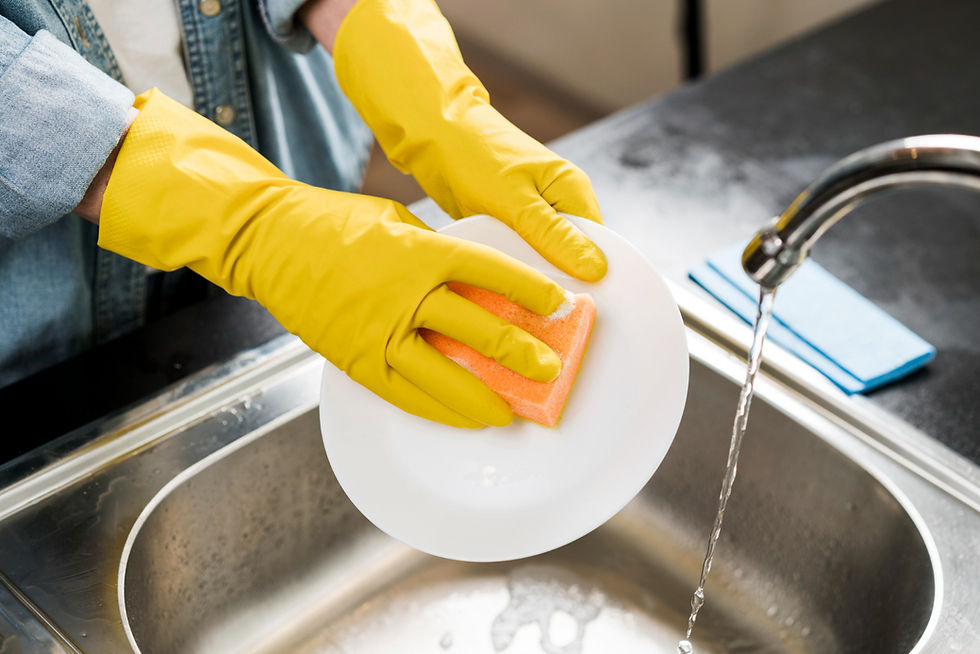
Think of hand washing costs like a leaky faucet. Each individual drip seems tiny and harmless, but over a month, you have lost hundreds of litres without noticing. Most owners calculate dishwashing costs by looking at the obvious: the salary of the dishwasher and the price of dish soap. That is it.
So what gets missed? A long tail of expenses that hand washing creates quietly in the background:
Hours of staff time that could be spent on food prep, service, or closing duties.
Water consumption that runs continuously while sinks are filling and rinsing.
Plates and glasses broken from rushed scrubbing during peak hours.
Inconsistent sanitation that leads to cross contamination risks and failed inspections.
Staff fatigue and turnover from one of the most physically demanding jobs in the kitchen.
Hand washing feels cheap because the costs are scattered. A commercial dishwasher feels expensive because the cost is upfront and visible. But scattered costs add up fast.
What Is the True Cost of Manual Dishwashing in F&B?
Here is the simplest way to think about it. The true cost of manual dishwashing is the total of direct labour, utility consumption, breakage, chemical usage, and opportunity cost incurred by washing wares by hand instead of using a commercial dishwasher.
Think of it like an iceberg. What you see above the water (staff salary, soap) is just 30% of the cost. The other 70% sits hidden below the surface, and it is the part that quietly sinks your margins. In most F&B operations, this hidden total ranges from 1.5x to 3x the visible cost owners typically calculate. The bigger the operation, the wider the gap.
To understand why, let us look at each cost category one by one.
The Five Hidden Costs of Hand Washing
1. Labour Hours: The Biggest Silent Drain
Labour is the single largest hidden cost in manual dishwashing, and also the most underestimated.
Think of every hour of dishwashing as a slice of your operating budget being eaten in real time. A staff member hand washing wares for a 100 cover restaurant can easily spend 3 to 5 hours per day on dishes alone. At Singapore's typical F&B wage of S$10 to S$14 per hour, that adds up to:
S$30 to S$70 per day in pure dishwashing labour.
S$900 to S$2,100 per month, before overtime or peak day surges.
S$10,800 to S$25,200 per year in hand washing labour costs.
A commercial dishwasher does the same volume in 40 to 60 minutes of total operator time across the day. That is not just savings, it is a redeployment of human hours back into service, prep, or upselling.
This is why F&B labour costs are often the deciding factor in commercial dishwasher ROI calculations.
2. Water Waste: The Tap That Never Stops
Hand washing feels economical because you do not see the water meter spinning. But trust us, it is spinning.

Think of a three compartment sink like a tap that has been left running for half an hour straight. A typical setup uses 8 to 15 litres per minute of running water during active washing. Across a busy service, this adds up to:
200 to 400 litres of water per hour of hand washing.
1,500 to 3,000 litres per day in a mid sized restaurant.
3. Breakage: The Cost You Throw in the Bin
Tired hands break things. It is that simple.
Think of glassware as your fragile inventory. Every glass that hits the floor or chips during a rushed scrub is not just a broken object, it is money you have to spend again to replace it. Industry observation suggests hand washing breakage rates run 2 to 4x higher than machine washing, especially for glassware. For a restaurant going through 200 glasses a night:
Hand washing breakage of 1 to 2% means 2 to 4 glasses lost per service.
Over a year, that is roughly 700 to 1,400 glasses replaced.
At S$3 to S$8 per glass, replacement costs can hit S$2,000 to S$10,000 annually.
Plates and ceramic ware add another layer of cost. Commercial dishwashers, with their controlled racks and consistent wash cycles, dramatically reduce this number.
4. Chemical Overuse: Pouring Money Down the Drain
When staff hand wash, they tend to over pour detergent. Partly out of habit, partly because manual washing genuinely needs more soap to compensate for lower water temperatures and inconsistent agitation.
Think of a commercial dishwasher's chemical dispenser like a precise medicine dropper, while hand washing is more like pouring straight from the bottle. Commercial dishwashers use precisely metered doses of detergent, rinse aid, and sanitiser through automatic dispensers. The result is:
30 to 50% less chemical consumption per wash cycle.
More consistent sanitation.
Lower long term spending on cleaning supplies.
There is real science behind why metered dosing works better, and we go into how detergents and rinse aids actually behave inside a commercial wash cycle in our guide on commercial dishwasher chemicals and rinse aids.
5. Sanitation Risk: The Cost You Pray Never Happens
This one is the scariest cost, because it is the one you cannot predict until it strikes.
Hand washing relies on water that rarely exceeds 45°C, because human hands cannot tolerate hotter. The problem? Effective sanitation typically requires a final rinse at 82°C or higher, per food safety standards like TR 60:2017.

Think of unsanitised wares as a ticking time bomb in your kitchen. They look spotless, they smell clean, but underneath, they may still carry harmful microorganisms. This means hand washed wares are almost always under sanitised, even when they look perfect. The risks include:
Failed health inspections.
Foodborne illness incidents that damage reputation.
Insurance claims and operational shutdowns.
A single sanitation related incident can cost more than a decade of dishwasher payments. This is a cost most owners never factor in until it happens.
Real World Example: A 60 Seat Bistro in Singapore
Numbers tell the clearest story, so let us walk through one together.
Consider a 60 seat bistro running lunch and dinner service, six days a week. Here is what their monthly costs looked like before and after switching from hand washing to a commercial dishwasher:
Cost Category | Hand Washing (Before) | Commercial Dishwasher (After) |
Dedicated Dishwashing Staff | S$2,200/month | Hours redeployed to prep & service |
Water Usage | ~1,800 litres/day | Dropped by ~60% |
Glass Breakage | ~80 glasses/month at S$5 = S$400 | Under 20 glasses/month |
Detergent & Sanitiser Spend | S$280/month | Dropped by ~40% |
Machine Cost (incl. chemicals & water) | — | ~S$450/month (36 month payoff) |
Total Monthly Cost | ~S$3,200 | ~S$1,650 |
Monthly Savings | — | ~S$1,550 |
Annual Savings | — | Over S$18,000 |
The bistro saved roughly S$1,550 per month, over S$18,000 per year, while also improving sanitation and reducing staff fatigue. That is the real commercial dishwasher ROI most owners never calculate.
Worth noting: a residential machine could not have handled this volume. If you are tempted to "save more" by buying a home unit, our article on commercial vs. residential dishwashers explains why that is almost always a costly mistake.
Strategic Insight: Why This Matters Beyond the Numbers
Here is something many operators miss when they evaluate this decision. The hand washing vs commercial dishwasher debate is not just about money. It is about where you choose to spend your team's energy.

Think of every hour of dishwashing labour as a coin you only have one of. You can spend it on scrubbing pots, or you can spend it on activities that actually grow your business. Every hour your staff spends scrubbing pots is an hour they are not:
Greeting guests.
Plating with care.
Up selling desserts or drinks.
Closing the kitchen on time.
In a tight margin industry like F&B, the question is not "Can I afford a commercial dishwasher?" It is "Can I afford to keep paying the hidden costs of not having one?"
For a deeper look at the long term financial picture, our hub article on why buying your commercial dishwasher is cheaper than renting in the long run lays out the full ownership case.
Quick Diagnostic: Is Hand Washing Quietly Costing You?
We know every kitchen is different, so instead of giving you a blanket recommendation, here is a simple checklist you can run through for your own setup:
Does your dishwasher (the person) work more than 3 hours a day on dishes alone?
Do you replace more than 30 glasses or plates per month?
Does your final rinse water reach 82°C consistently?
Are your detergent and chemical bills creeping up month over month?
Has staff turnover in your dish area been higher than the rest of the kitchen?
If you answered "yes" to two or more, your hand washing setup is almost certainly costing you more than a commercial machine would.
Final Thoughts: Stop Paying for "Cheap"
Hand washing is not free. It just hides its costs better than a dishwasher does.
Think of it like renting versus owning a home. Renting feels lighter month to month, but over a decade, you have paid more and built nothing. When you add up the labour hours, water bills, breakage, chemical overuse, and sanitation risk, manual dishwashing routinely costs F&B operators 1.5x to 3x what a commercial machine would. Without the hygiene assurance, without the speed, and without the scalability.
If you are still relying on hand washing because it "feels cheaper," it is worth running the numbers honestly. The hidden costs are real, they are recurring, and they are quietly eating into the margins that should be funding your growth.
A commercial dishwasher is not an expense. It is a tool that pays for itself by recovering the costs you cannot see. And if you would like a hand thinking through which model fits your kitchen best, we are always happy to help you find the right fit.


Comments